Hot Rolls Dice Strategy Game
- 4.9
- Rating
- 500.00K
- Installs
- Free
- Price

 Analysis by App-foxy
I spent time with Hot Rolls Dice Strategy Game to see whether its central idea could make a simple dice game feel more thoughtful than a few random rolls. My overall impression is that it works best when you treat each throw as a small decision rather than as a result to accept passively. That sounds modest, but it changes the rhythm of a casual game: I found myself watching the situation, weighing the risk of another roll, and thinking about when a safe move was better than chasing a stronger outcome.
This is a free casual game from FunCraft Games, aimed at Everyone and available for Android devices running version 7.0 or later. It has reached over one hundred thousand installs and holds a 4.9 average from around eleven thousand ratings, which suggests that its straightforward style has found an audience. I would not mistake those figures for proof that every player will enjoy it, though. Dice games depend heavily on how much uncertainty you find entertaining, and this one is most appealing when you like short strategic choices without the learning curve of a traditional board game.
The decision behind every roll
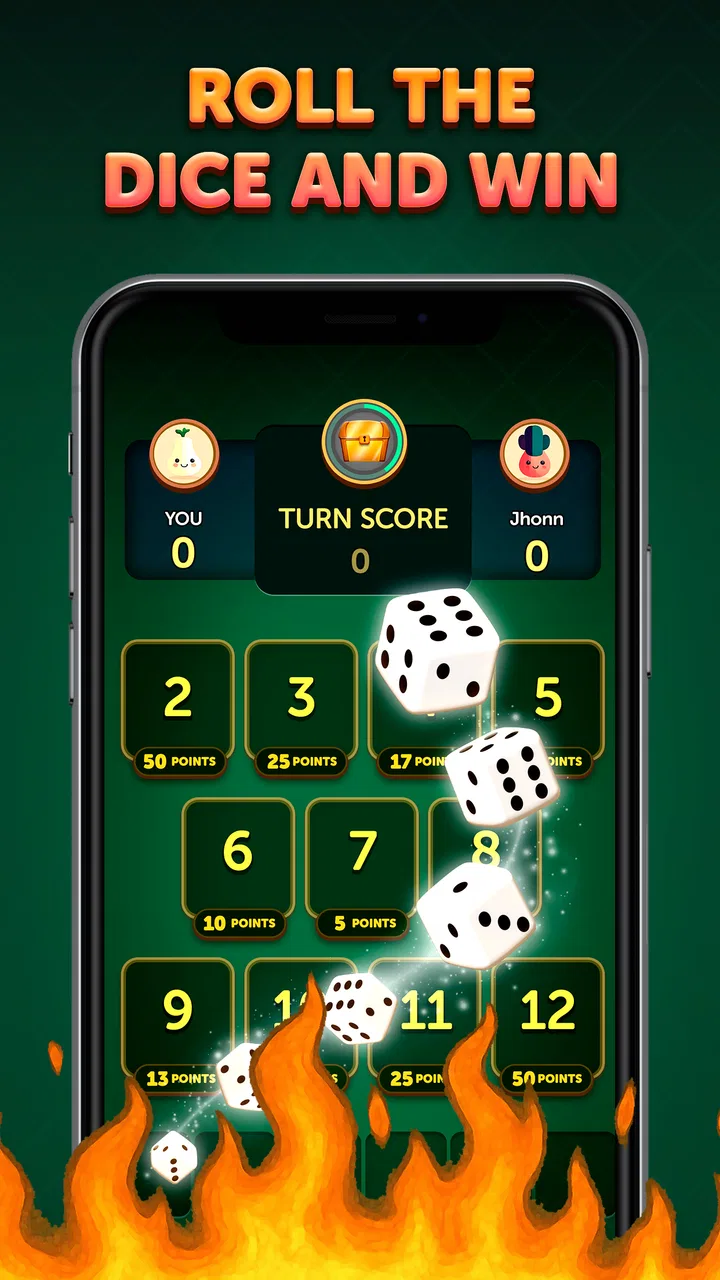
The capability that matters most here is the way the game turns dice throwing into a tactical choice. In a purely luck-driven dice app, I can usually tap, watch the result, and move on. Here, the interesting part is deciding whether the current position is good enough or whether I should take another chance. That creates a compact risk-and-reward loop: the roll gives me information, but the decision after the roll determines how much that information is worth.
You May Also Like

 Blood Strike: 2.5 Anniversary
Blood Strike’s Loadouts Turn Every Drop Into a Tactical Gamble
A close look at Blood Strike’s custom loadouts: how fast access to signature weapons reshapes its battle royale rhythm, rewards preparation, and narrows the gap between fights.

 Pandora - Music & Podcasts
Pandora’s Music Is Easy to Start, but Harder to Recover
Pandora’s strength is its low-effort path from a seed to a station. Its weak spot is how much confidence it asks you to place in connection, setup, and quiet recovery.

 8 Ball Pool
 Is Built on Rivalries, Rematches, and Routine
A close look at the rivalries, rematches, shared routines, and unanswered safety questions that turn a quick pool match into a persistent mobile community.

 Samsung Music
’s Quiet Strength Is Playing What You Already Own
Its reach comes less from spectacle than from dependable access to a personal library. That simplicity is both the app’s strongest retention engine and its ceiling.

 AccuWeather: Weather Radar
AccuWeather Review: A Quick, Clear Forecast for Everyday Decisions
For everyday plans, the best forecast is the one you can understand quickly. AccuWeather makes rain timing, radar, and local conditions easy to act on, with a few trade-offs.

 Hill Climb Racing
Why Hill Climb Racing Still Turns Crashes Into One More Run
A tiny car, a bumpy hill and one more upgrade: Hill Climb Racing keeps resurfacing because its simple chaos makes every near-miss feel personal.
More From Our News Desk



That distinction is important for anyone comparing this with a basic dice simulator. A simulator is useful when I only want random numbers. Hot Rolls Dice Strategy Game is trying to make the random result part of a contest. The appeal comes from the tension between a modest result that keeps me safe and a tempting possibility that could improve my position. I am not planning several turns like I would in a deep strategy game, but I am still making choices that feel more deliberate than tapping a button repeatedly.
I also like that the idea is easy to understand without a long tutorial. Casual games often lose me when they introduce several currencies, layered menus, or rules that only make sense after a dozen rounds. This game’s premise is much easier to grasp: roll, read the position, and decide how ambitious to be. That makes it suitable for a quick break, especially when I want something interactive but do not want to memorize a complicated system.
The strongest effect is psychological rather than mechanical. A poor roll is not automatically the end of the experience, because I can think about what to do next. A good roll is not automatically satisfying either, because I may wonder whether I should have pushed further. That extra question gives the game its identity. The real skill is knowing when to stop chasing luck.
How the choice feels during play
In practice, I approach each round by first separating what I have from what I want. If the current outcome already feels useful, preserving it becomes attractive. If it leaves me behind or gives me a chance to improve, another roll becomes more tempting. This sounds obvious, but the short format makes those decisions arrive quickly, so I have to rely on judgment instead of overthinking every possibility.
That pace is one of the game’s better qualities. I can play a few moments without committing to a long session, then stop when something else needs my attention. It fits the kind of use I associate with casual mobile games: waiting for an appointment, taking a short break from work, or relaxing before bed. The game does not need to replace a large strategy title to be worthwhile. Its value is in giving me a small decision loop that starts quickly and does not demand a large time investment.
At the same time, the quick structure means the strategic depth has a ceiling. I would not choose this when I want a campaign, a rich story, or a system that rewards hours of planning. The decisions are meaningful within their narrow frame, but they remain narrow. If I am looking for a complex tactical game with many interacting systems, a board-game adaptation or a deeper digital strategy title will probably offer more variety.
One useful habit I developed was to avoid judging a roll in isolation. I considered whether the result improved my position relative to the current situation, not whether it looked impressive on its own. That small change made my play less impulsive. It also helped reveal the game’s main trade-off: a spectacular result is attractive, but a consistent decision can be more valuable than a dramatic one.
For new players, I recommend playing the first few rounds without trying to maximize every outcome. Instead, notice what happens when you stop early and compare that feeling with the result of pushing your luck. This is a better way to understand the game than treating every turn as a test of perfect play. The point is not to remove uncertainty; it is to learn how comfortable you are managing it.
A realistic everyday use case
My favorite setting for this game is a short, interrupted break. Imagine waiting for a friend who is running late. I can open the game, make progress through a few quick decisions, and put the phone away without needing to remember a complicated storyline or preserve a long session. If the friend arrives in the middle of a round, the low-commitment format makes it easier to stop than it would be in a real-time multiplayer game or a story game with a lengthy mission.
It also works for someone who enjoys casual competition but does not want the pressure of a fast action game. The dice introduce uncertainty, while the strategic choice gives the player something to think about. That combination can be more relaxing than reflex-based play. I can focus on judgment rather than speed, which makes the game accessible to people who prefer a calmer pace.
Another good use is as a light social game. I can hand the phone to another person and explain the basic idea quickly, then compare how cautiously each of us plays. The contrast is entertaining: one player may protect a decent position, while another keeps rolling in search of something better. Even without turning it into a formal competition, that difference in risk tolerance gives the simple premise more personality.
However, I would not recommend it as the main game for a group that wants a shared board, conversation, and visible pieces on a table. A physical dice game offers a stronger social presence, and a multiplayer title built around direct interaction may create more memorable moments. This app is better for an individual player who wants a compact challenge or for two people taking turns with a phone rather than for a full party.
Where the trade-offs become noticeable
The biggest trade-off is the same feature that makes the game approachable: its focused design. The roll-and-decide loop is easy to enter, but repeated play depends on whether that loop stays interesting for you. I enjoyed short sessions because the uncertainty kept each decision lively. During longer sessions, I became more aware that the basic pattern was repeating. Players who need constant new rules, environments, or objectives may find the experience too restrained.
There is also a difference between strategic control and the feeling of control. I can make sensible decisions, but the dice still determine much of what happens. That is not a flaw in itself; uncertainty is the point. Still, anyone who dislikes losing after making a reasonable choice may find the game frustrating. It rewards good judgment without guaranteeing a good result, so the emotional experience depends on accepting that a smart decision can still fail.
The free entry point is welcome, but the game includes in-app purchases ranging from forty-nine cents to forty-nine dollars and ninety-nine cents per item. I would keep that in mind before recommending it to someone who wants a completely purchase-free experience. The game can be tried without paying, which lowers the barrier to entry, but players should still approach optional spending carefully and decide in advance whether they want to buy anything.
For me, the sensible approach is to evaluate the core loop first. I would not spend money simply because the first few rounds are enjoyable. I would play long enough to decide whether the risk decisions remain engaging, then consider whether any purchase genuinely improves my experience. That is especially important here because the game’s appeal comes from its basic choice structure, not from needing a large collection of extras to understand the premise.
Device compatibility is reasonably broad for an Android game, since it supports Android 7.0 and later. That makes it a practical option for people using older compatible phones, although the experience will still depend on the individual device. I would install it on a secondary or older phone only after checking that the display and controls feel comfortable, because dice-based decisions are simple but still benefit from clear presentation and responsive taps.
Who gets the most from it
I think the best audience is someone who enjoys casual games with a small strategic layer. If you like deciding whether to bank a result or take another chance, this is a natural fit. It is also a good choice for players who want sessions that can be measured in short bursts rather than games that demand a long uninterrupted commitment.
It may suit beginners particularly well because the basic idea is approachable. I did not need specialist knowledge of strategy games to understand why a decision mattered. A player can start with instinct, then gradually become more disciplined by observing when bold choices help and when they cause unnecessary setbacks. That gradual improvement is more satisfying than a game that explains every optimal move immediately.
On the other hand, I would suggest skipping it if you want a fixed, skill-dominated experience where careful planning consistently overrides randomness. I would also look elsewhere if your priority is a narrative adventure, a deep deck-building system, or a large competitive community. The high rating and growing install count show that many players appreciate the format, but popularity does not change its deliberately limited scope.
Compared with a standard dice roller, this game gives me a reason to care about the result. Compared with a full board-game adaptation, it is faster and easier to start, but it offers less room for long-term planning. Compared with reflex-heavy casual games, it is calmer and more thoughtful, though it may feel less exciting to someone who wants constant action. Those comparisons helped me place it accurately: it is not trying to be everything, and it works best when I want a focused dice challenge.
The current release is version 1.2.24354, and the game was released on May 23, 2025. I mention that because the experience feels like a relatively focused product rather than a sprawling platform with years of accumulated systems. The developer, FunCraft Games, has kept the central concept easy to recognize, which is helpful for a casual audience. I would still judge future updates by whether they add meaningful variety without burying the simple decision loop under unnecessary complexity.
My final recommendation
After playing it, I see Hot Rolls Dice Strategy Game as a good recommendation for a specific mood: I want something free, quick, and easy to understand, but I still want my choices to matter. Its best feature is not the act of rolling itself. It is the pause afterward, when I decide whether a safe result is enough or whether I am willing to risk it for a better one.
I would recommend trying it if you enjoy casual strategy, uncertain outcomes, and short sessions. I would be more cautious with the recommendation for players who need extensive content or who become annoyed when luck can overturn a sensible plan. The free price makes testing it simple, while the Everyone rating makes it broadly approachable, but the in-app purchase range is a reason to keep spending intentional.
My practical advice is to play conservatively at first, learn how the risk feels, and then experiment with more ambitious choices. Pay attention to whether you enjoy the decision itself, not only whether the dice favor you. If that moment of hesitation is fun, this game has a compact loop worth returning to. If it feels like waiting for random numbers, a conventional strategy game or a more social dice alternative will probably suit you better.
In short, this is a focused casual dice game with a clear personality. It does not need elaborate systems to create tension; it uses the simple question of whether to continue. For players who enjoy turning luck into a decision, it is an easy game to keep installed for those small gaps in the day.
FAQs for Hot Rolls Dice Strategy Game
01What is Hot Rolls Dice Strategy Game about?
Hot Rolls Dice Strategy Game is a strategic board game that combines elements of luck and skill. Players roll dice to achieve specific combinations and earn points. The game involves making tactical decisions on whether to keep rolling for higher scores or secure what you’ve achieved. It's designed for both casual and competitive play.
02How do you play Hot Rolls Dice Strategy Game?
Players take turns rolling dice to achieve certain scoring combinations. Each round, you can choose to reroll some or all of your dice to improve your score. The objective is to accumulate the highest points by the end of the game. Strategic decision-making is key, as players must decide when to take risks or play it safe.
03Is Hot Rolls Dice Strategy Game available for both Android and iOS?
Yes, Hot Rolls Dice Strategy Game is available for download on both Android and iOS platforms. You can find it on the Google Play Store for Android devices and the Apple App Store for iOS devices. Ensure your device meets the minimum system requirements for a smooth gaming experience.
04Are there any in-app purchases or ads in Hot Rolls Dice Strategy Game?
Hot Rolls Dice Strategy Game offers in-app purchases that can enhance gameplay, such as additional dice sets or themes. While the basic version is free, it may include ads. However, players have the option to purchase an ad-free version for uninterrupted play. Always check the app store for the latest purchase options.
05Can I play Hot Rolls Dice Strategy Game with friends?
Yes, Hot Rolls Dice Strategy Game features both single-player and multiplayer modes. You can challenge your friends online or play against random opponents. The game also supports local multiplayer, allowing you to play with friends on the same device. It’s a great way to enjoy a competitive gaming experience with others.
Pros
- Engaging turn-based strategy gameplay.
- Simple rules
- easy to learn for beginners.
- Variety of dice and boards available.
- Multiplayer mode enhances competitiveness.
- Visually appealing with vibrant graphics.
Cons
- Limited free levels without purchasing.
- Requires constant internet connection.
- Occasional ads disrupt gameplay flow.
- Lacks offline single-player mode.
- In-app purchases can be pricey.

Hot Rolls Dice Strategy Game
Gallery